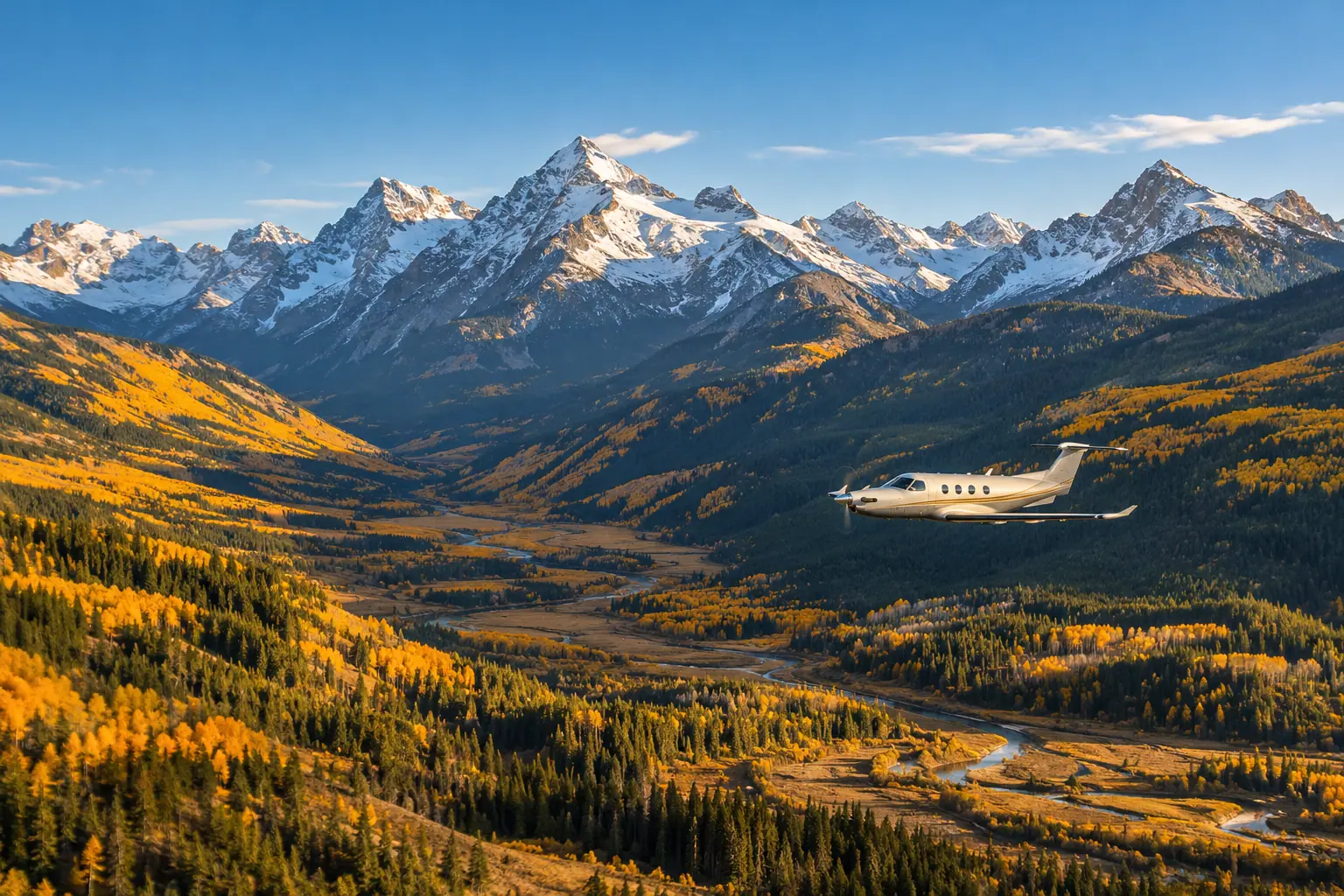
Turboprop charter cost Aspen
Turboprop charter cost Aspen runs $2,200 to $3,500 per hour. A Los Angeles trip covers 634 nm in about 2h 31m and starts near $5,500. These are planning figures, so quotes shift with tail and date.
- $2,200–$3,500per flight hour
- 6-8passengers
- 1,500 nmtypical range
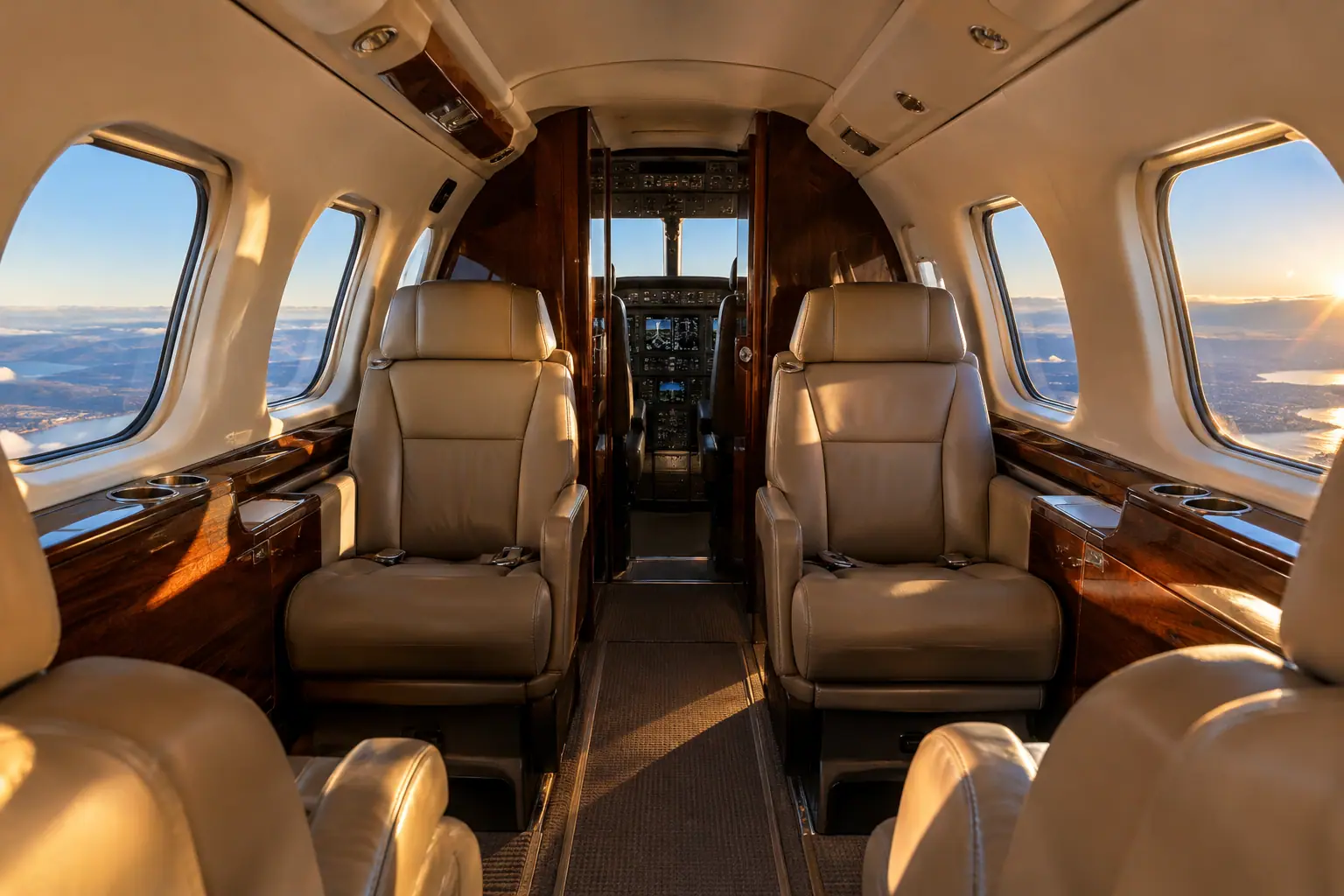
Turboprop charter cost Aspen depends on the same variables that price any charter: hours flown, aircraft type, and how the operator has to position the plane. The class range here is $2,200 to $3,500 per hour, but the hourly figure is only the starting point. A Beechcraft King Air 350i and a Pilatus PC-12 NGX both sit in this class, and they do not price the same on the same route. Hourly rates for a twin engine turboprop in Aspen start at $2,200, but the full quote adds positioning and taxes. Planes are not based here year-round in the same numbers as in Denver, so an operator may have to fly an empty leg into KASE before your flight begins, and that empty leg is part of the bill. On top of the hourly rate, expect segment fees, fuel surcharges where the operator applies them, crew overnight costs if the schedule demands it, and federal excise tax. None of those are buried; a broker should show them line by line so the total is auditable against the hourly figure you were quoted.
The trip itself sets the floor. Nonstop distance drives hours, and hours drive dollars, which is why a Dallas run at roughly 619 nautical miles prices far below a Boston run at 1,616. Turboprop charter cost Aspen varies most with distance, so short routes from Los Angeles and Dallas price below $9,000 one way. Every route in this class has a one-way and a round-trip version, and round trips often cost less than double the one-way because the return leg reuses the positioning the operator already paid for. Peak dates change the math again. Presidents' Day weekend, the Christmas holidays, and the X Games window compress supply at KASE, and a quote issued in October will not hold in February. Ask for a dated quote and ask how long the operator will honor it.
Daher TBM 960
- 6 seats
- 330 kt cruise
- 1,730 nm range
- 32 cu ft baggage
Beechcraft King Air 350i
- 8 seats
- 312 kt cruise
- 1,800 nm range
- 55 cu ft baggage
The Beechcraft King Air 350i carries 8 passengers at 312 knots with 1,800 nautical miles of range, and it is the workhorse of this class. The cabin measures 4 ft 9 in tall and 16 ft 8 in long, with 55 cubic feet of baggage, enough for skis and soft bags if the party packs tight. It gives you two engines and a faster cruise than the PC-12, which is why it typically prices toward the top of the $2,200 to $3,500 hourly band. On the Los Angeles route at 634 nm it runs nonstop in about 2h 31m.
When a turboprop is the right choice
- When the passenger count is 6 to 8 and baggage is modest: a turboprop fits 6-8 passengers, so a family ski trip in Aspen often prices below a light jet. The cabin dimensions matter too. The King Air 350i gives you 55 cubic feet of baggage, the PC-12 NGX about 40, and ski bags eat that space fast.
- When the route is under roughly 1,500 nautical miles and a fuel stop is acceptable: turboprops cruise near 300 knots, so a transcon flight in Aspen adds a stop and hours. New York at 1,503 nm runs about 6h 19m and is not nonstop in this class, which is a real cost and a real schedule change versus a jet.
- When the airport is the constraint: KASE sits at 7,820 feet, so density altitude on a warm day affects which aircraft and payloads are legal. Turboprops handle mountain strips well at moderate loads, and operators who fly here regularly know the performance numbers cold.
- When the budget is the constraint and the trip is regional: a charter from Los Angeles or Dallas in Aspen starts near $5,500 one way, well under jet pricing on the same city pairs. If the mission is two days of skiing and a return, the hourly savings compound.
What the turboprop numbers do not cover
The prices on this page are estimates for the aircraft, not a final invoice. They assume a standard one-way trip, normal passenger loads, and no unusual ground time. They do not include de-icing at KASE, which is routine in winter and billed by the operator; crew overnight costs on multi-day itineraries; or waiting time beyond the operator's allowance. Ground transportation from the airport up to the resort is separate as well.
Weather is the other variable the numbers cannot capture. When a storm closes the pass roads, demand for any charter in Aspen spikes and so do repositioning costs, because aircraft have to come from farther away. A broker's role here is disclosure, not prediction. Charter brokers work as agents under DOT Part 295, while each flight is flown by an operator holding FAA Part 135 authority and operational control; the operator is the party answerable for the flight and its crew. Ask for the operator's name and certificate before you sign.
Turboprop prices on popular routes
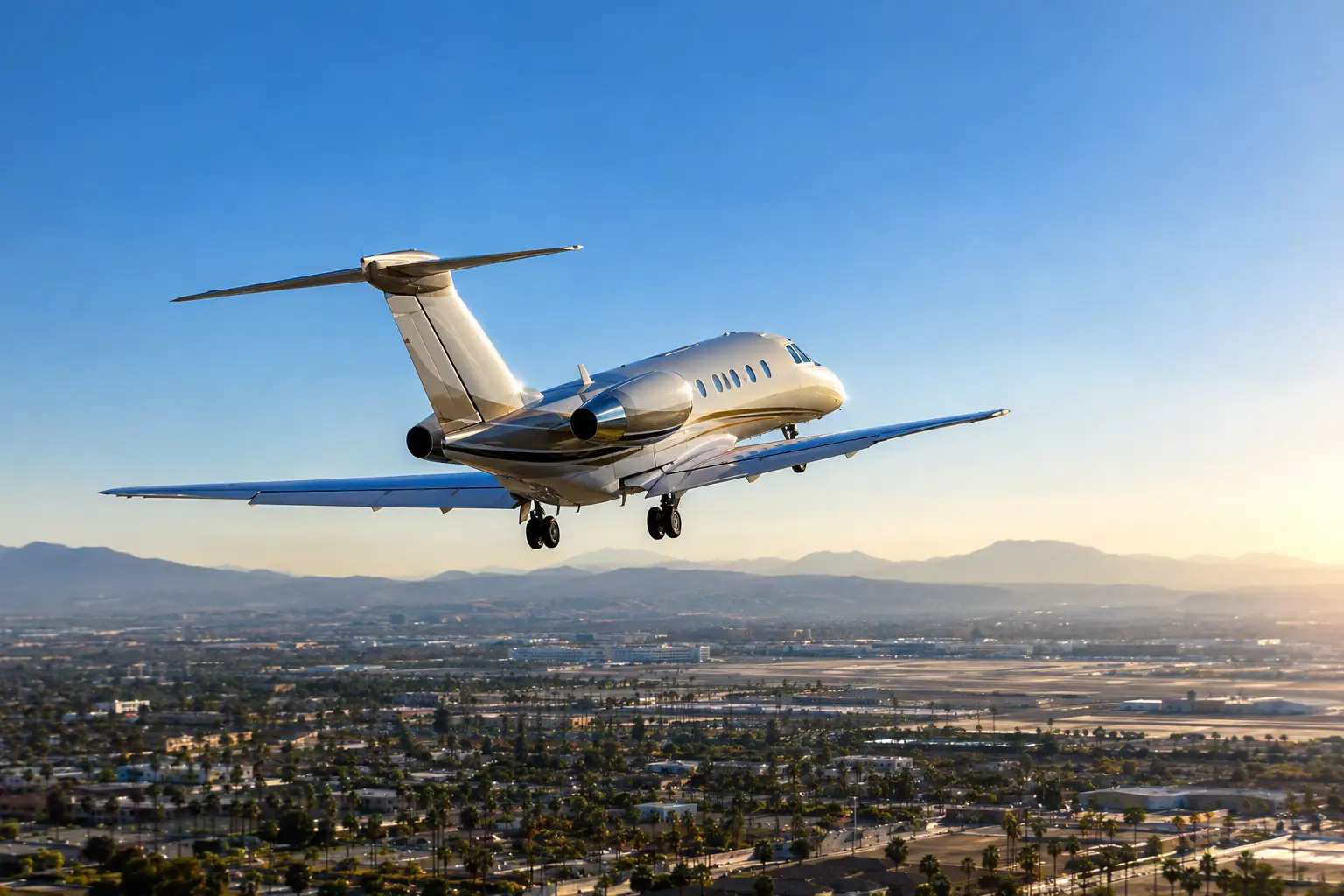
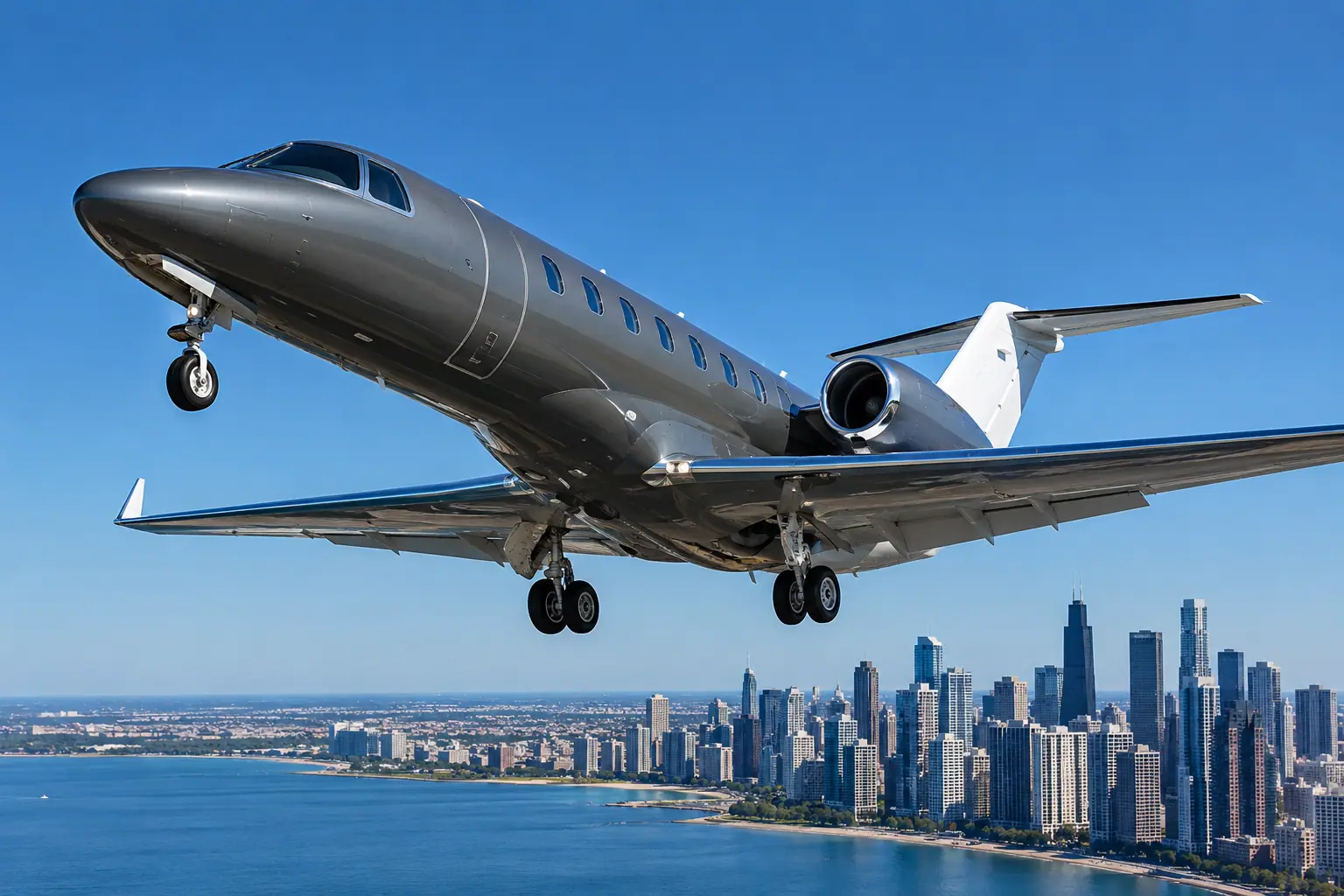
Eight sample city pairs show how turboprop charter cost Aspen moves with distance. One-way estimates start at $5,500 from Los Angeles and Dallas and climb past $15,000 from Boston, where the trip is not nonstop. Use these as a planning band, then get a dated quote for your specific tail.
Turboprop charter times and prices by route
On a turboprop the 24 routes take 1h 24m to 8h 15m, with single-leg estimates spanning $3,000 to $29,000.
| Route | Time | One-way estimate |
|---|---|---|
| New York → Aspen | 6h 19m + stop | $14,000–$22,000 |
| Los Angeles → Aspen | 2h 31m | $5,500–$9,000 |
| Chicago → Aspen | 3h 24m | $7,500–$12,000 |
| Dallas → Aspen | 2h 28m | $5,500–$8,500 |
| Houston → Aspen | 3h 08m | $7,000–$11,000 |
| Atlanta → Aspen | 4h 16m | $9,500–$15,000 |
| Washington, DC → Aspen | 5h 50m + stop | $13,000–$20,500 |
| Boston → Aspen | 6h 42m + stop | $15,000–$23,500 |
| Philadelphia → Aspen | 6h 11m + stop | $13,500–$21,500 |
| Phoenix → Aspen | 1h 46m | $4,000–$6,000 |
| San Francisco → Aspen | 2h 52m | $6,500–$10,000 |
| Seattle → Aspen | 3h 13m | $7,000–$11,500 |
| Las Vegas → Aspen | 1h 50m | $4,000–$6,500 |
| Nashville → Aspen | 3h 43m | $8,000–$13,000 |
| Charlotte → Aspen | 5h 27m + stop | $12,000–$19,000 |
| Orlando → Aspen | 6h 01m + stop | $13,000–$21,000 |
| Aspen → New York | 6h 19m + stop | $14,000–$22,000 |
| Aspen → Los Angeles | 2h 31m | $5,500–$9,000 |
| Aspen → Nassau | 7h 02m + stop | $15,500–$24,500 |
| Aspen → Cabo San Lucas | 3h 43m | $8,000–$13,000 |
| Aspen → Turks and Caicos | 8h 15m + stop | $18,000–$29,000 |
| Aspen → Palm Beach | 6h 26m + stop | $14,000–$22,500 |
| Aspen → The Hamptons | 6h 35m + stop | $14,500–$23,000 |
| Aspen → Jackson Hole | 1h 24m | $3,000–$5,000 |
Questions
What is the turboprop charter cost Aspen for a typical ski weekend?
A round trip from Los Angeles typically lands between $11,000 and $18,000, based on the $5,500 to $9,000 one-way estimate doubled with a modest return discount. From Dallas the band is $5,500 to $8,500 each way. Add de-icing, crew time on short stays, and peak-date premiums. Ask for a dated quote because Christmas and Presidents' Day pricing will not match an off-peak figure.
How many passengers fit in a turboprop flying into Aspen?
Between 6 and 8, depending on the aircraft. The Beechcraft King Air 350i seats 8 and the Pilatus PC-12 NGX seats 6. Baggage is the real constraint, at 55 cubic feet in the King Air and 40 in the PC-12, and ski bags consume that quickly. If your party is 8 with full ski gear, ask the operator to confirm the load against the day's density altitude at KASE before you book.
Can a turboprop fly nonstop from New York to Aspen?
No, not in this class. The New York route is 1,503 nm and prices at $14,000 to $22,000 with a fuel stop, at about 6h 19m total. Boston at 1,616 nm is the same story, nonstop no, and Washington at 1,365 nm also carries a stop. If a nonstop transcon is the requirement, a jet is the answer and the cost moves accordingly. Turboprops make their case on routes where the savings are real.
How does Aspen's elevation affect turboprop pricing?
KASE sits at 7,820 feet, and density altitude on a warm day reduces the payload a given aircraft can legally carry. Operators may need to limit baggage, reduce passenger count, or stage fuel, and some trips need a tech stop. That is why quotes for the same route can differ between operators. Ask what temperature and weight assumptions the quote was built on, and confirm them against your travel date.
What is the difference in cost between a turboprop and a light jet to Aspen?
Turboprop hourly rates run $2,200 to $3,500, and light jets sit above that band on comparable missions, so the gap widens with hours flown. On a Los Angeles run of about 2h 31m, the turboprop estimate starts at $5,500. The trade is speed and range: turboprops cruise near 300 knots and need a stop beyond roughly 1,500 nm. Match the aircraft to the route before comparing totals.
Who is responsible for the flight when I book through a broker?
The operator is. Brokers act as agents under DOT Part 295 and arrange the trip; the flight itself is flown by an operator holding FAA Part 135 authority, which holds operational control, including dispatch, crew duty limits, and maintenance. Ask for the operator's name and certificate before you sign, and confirm the tail number on your quote matches the one on the ramp. International legs add CBP clearance requirements.