Private jet Aspen Pitkin County
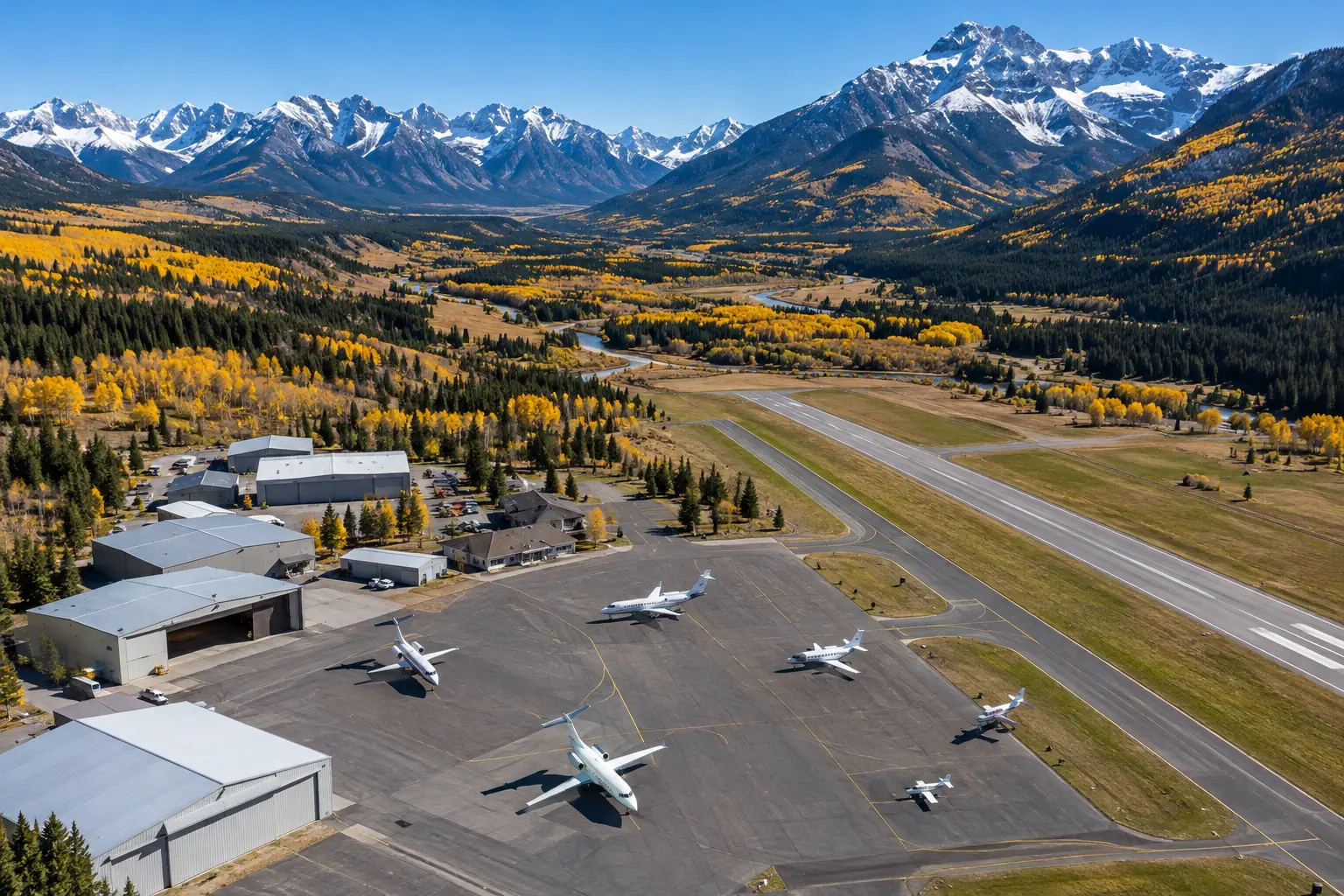
Private jet Aspen Pitkin County service lands at KASE, Sardy Field, 7,820 feet above sea level. The single runway measures 8,006 feet, and that figure governs which aircraft can serve you. Mountain terrain and summer heat decide the rest.
- KASE · ASEairport codes
- 7,820 ftfield elevation
- 8,006 ftlongest runway
- 4 mito Downtown Aspen
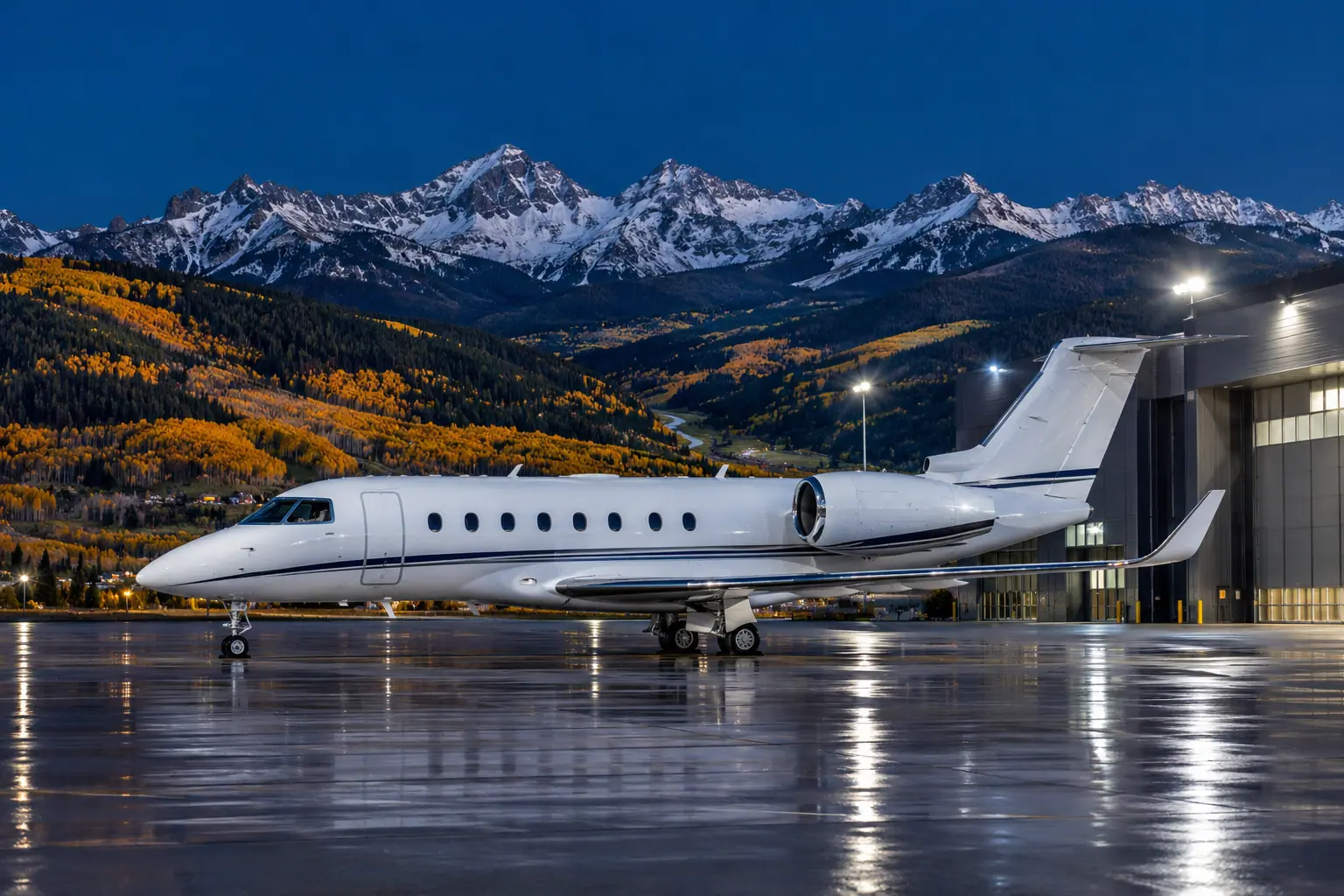
Planning a private jet Aspen Pitkin County trip starts with one number: 7,820 feet. Aspen-Pitkin County Airport, also called Sardy Field, sits that far above sea level in the Roaring Fork Valley, and every performance question about a charter flight traces back to it. The field carries the codes KASE and ASE, about 502 miles from the airstrip the site is built around. Elevation and one runway set the operating rules for every private jet into Aspen.
The field has a single runway and two FBOs, Signature Aviation - North and Atlantic Aviation. On the ground, the terminal sits minutes from downtown Aspen, and the drive climbs into the upper valley toward Snowmass. Winter brings ski traffic; summer brings festival and hiking traffic. Both compress the calendar into busy windows, and both change what the runway allows. Booking early matters more here than at a sea-level airport with three runways.
This service is a charter broker arrangement. Flights are flown by FAA Part 135 operators who hold operational control, and the broker acts as an agent under DOT Part 295 rules. That structure means quotes depend on the operator, the aircraft type and the day, and prices are estimates until an operator confirms. Request a quote for KASE and the numbers below explain why the answer varies. A light jet and a midsize jet get very different answers at this elevation.
Runway length and field limits at KASE
The runway at Aspen-Pitkin County Airport measures 8,006 feet, which sounds generous until you pair it with 7,820 feet of elevation. Thin air reduces lift and engine output, so a jet needs more runway to reach takeoff speed and more distance to stop. In July the density altitude averages 11,000 feet, and at 115F it can reach 11,600 feet. At 11,000 feet of density altitude, many light jets must shed payload to depart legally.
| Runway | Length | Width | Surface |
|---|---|---|---|
| 15/33 | 8,006 ft | 100 ft | Asphalt |
Fixed base operators at Aspen
Two FBOs serve KASE: Signature Aviation - North and Atlantic Aviation. Both handle general aviation traffic on the same field, and both are the point where your ground arrangements begin. Ground transport into town can be arranged in advance, which matters in winter when roads and traffic tighten. Confirm your FBO assignment with the operator before departure, since it shapes your ground plan.
Who KASE works best for
- Ski travelers heading to Aspen and Snowmass who value a short ground transfer over a longer drive from a lower airport
- Travelers flying light or midsize jets in cooler months, when density altitude sits closer to field elevation
- Groups traveling together in winter, when a single aircraft beats multiple commercial connections
- Summer visitors who can stay flexible on departure time if heat limits payload
| Class | Typical runway need | Here |
|---|---|---|
| Turboprop | 3,300 ft+ | Sufficient |
| Light jet | 4,000 ft+ | Sufficient |
| Midsize jet | 5,000 ft+ | Sufficient |
| Super-midsize jet | 5,200 ft+ | Sufficient |
| Heavy jet | 5,600 ft+ | Sufficient |
Weather and density altitude by season
Density altitude at KASE climbs from 7,900 feet in January to 11,000 feet in July and eases back by December. In practice that means winter flying is close to the field's physical elevation, while midsummer flying behaves like a much higher airport. July highs average 79F and June averages 73F, so the hot months are also the tight months for performance. Summer departures from Aspen can be weight-limited even when the sky is clear.
Moisture adds a second variable. Wet days run 12 to 13 per month from January through April, then drop to 7 to 9 per month from June through September. Mountain weather moves quickly in any season, so operators build fuel and alternate plans around it. When storms stack over the Elk Mountains, then inbound and outbound flights can hold or divert. Ask how the operator handles that scenario.
| Month | Avg high | Wet days | Density altitude |
|---|---|---|---|
| Jan | 32°F | 12 | 7,900 ft |
| Feb | 35°F | 13 | 8,100 ft |
| Mar | 41°F | 13 | 8,500 ft |
| Apr | 48°F | 13 | 9,000 ft |
| May | 57°F | 11 | 9,600 ft |
| Jun | 73°F | 7 | 10,600 ft |
| Jul | 79°F | 9 | 11,000 ft |
| Aug | 77°F | 8 | 10,900 ft |
| Sep | 71°F | 7 | 10,500 ft |
| Oct | 56°F | 8 | 9,500 ft |
| Nov | 42°F | 10 | 8,600 ft |
| Dec | 34°F | 11 | 8,000 ft |
Getting from the airport to Aspen
The airport sits a short drive from downtown Aspen, which keeps ground transfers brief compared with driving in from a distant airport. Winter weather can slow that drive, so build slack into tight connections. When snow closes mountain passes, then the value of landing at KASE rather than a lower-altitude field becomes obvious. Arrange ground transport through the operator or your arranger before arrival.
Private jet routes via Aspen-Pitkin
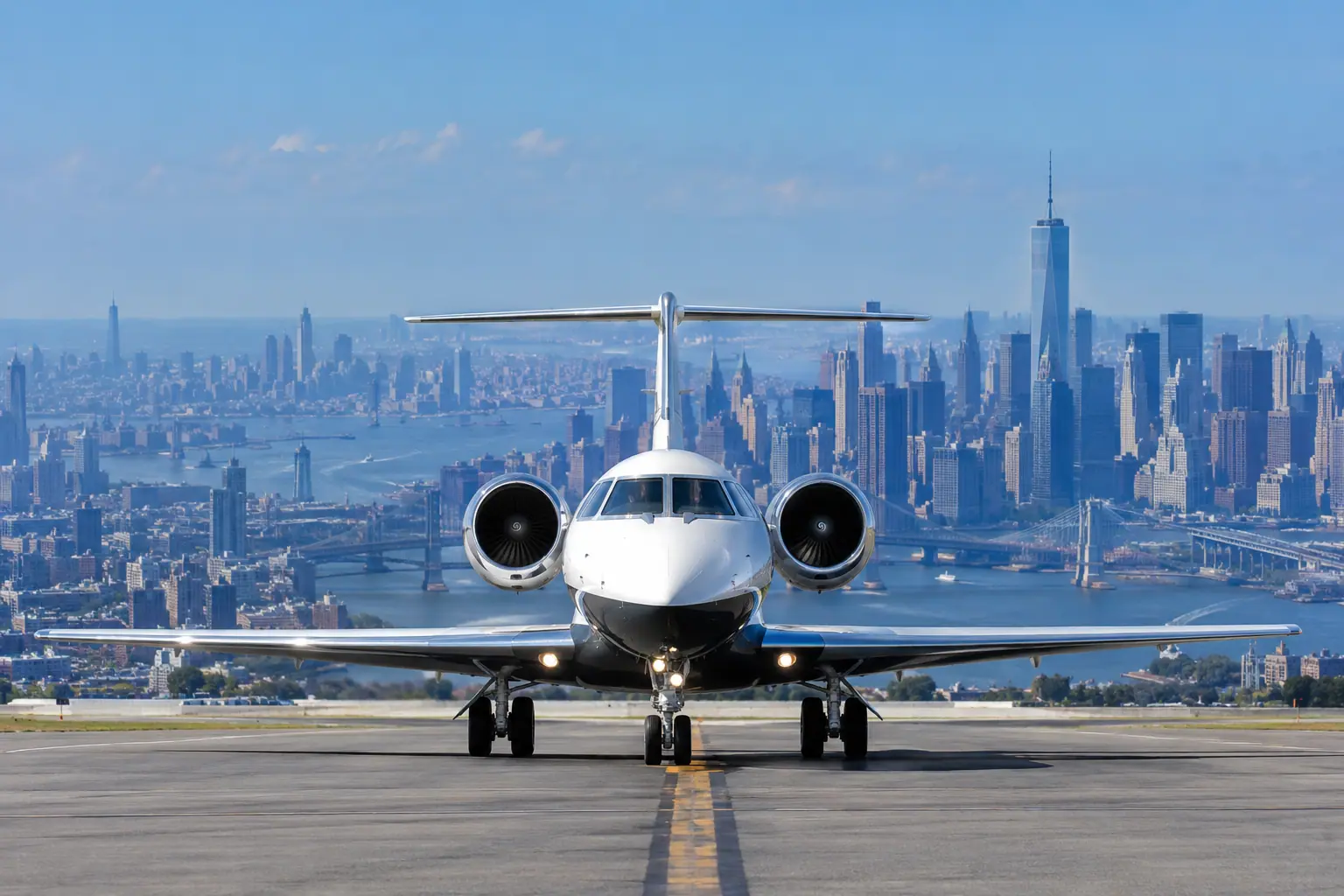
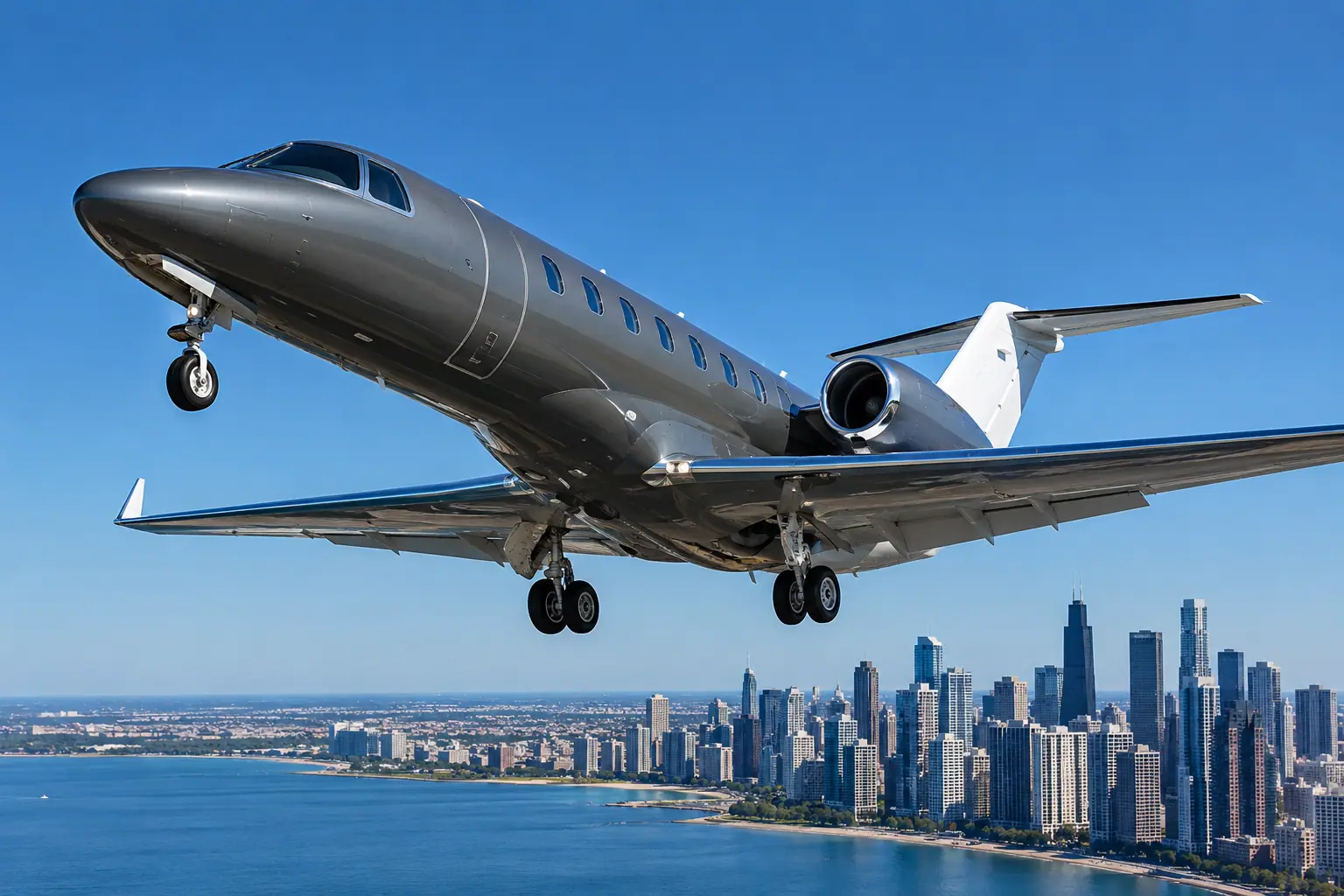
This set of 6 private jet routes spans 619 to 1,503 nautical miles, with single-leg light jet estimates ranging $7,000 to $27,500.



Airport-related questions
What is the elevation of Aspen-Pitkin County Airport?
KASE sits at 7,820 feet above sea level, making it one of the higher commercial-service fields in the United States. That elevation drives everything else about flying here, because air density falls as altitude rises. Planes need longer takeoff runs and produce less thrust in the thin air, which is why aircraft performance, not distance, often sets the limits on a charter flight into Aspen.
How long is the runway at Aspen-Pitkin County?
The runway is 8,006 feet long, and it is the only runway at the field. At sea level that length accommodates most business jets comfortably. At 7,820 feet, effective performance drops, and some aircraft need weight reductions to use it. Operators calculate takeoff and landing distances for the specific day's temperature and pressure before confirming a flight.
How does density altitude affect private jet Aspen Pitkin County flights?
Density altitude at KASE ranges from about 7,900 feet in January to 11,000 feet in July, and can reach 11,600 feet at 115F. High density altitude means the aircraft behaves as if it were at a much higher airport, reducing lift and engine performance. When density altitude rises, then payload, fuel or both may be reduced, and some aircraft types cannot operate at all in peak summer heat.
Can a light jet fly into Aspen?
Some light jets can serve KASE in cooler months, but summer density altitude of 11,000 feet or more often pushes them against weight limits. Turbojets with strong high-altitude performance handle the field better. The right answer depends on your party size, luggage and travel date, so ask for the aircraft type and performance numbers rather than assuming a category works.
Which FBOs serve Aspen-Pitkin County Airport?
Signature Aviation - North and Atlantic Aviation both operate at KASE. They handle general aviation arrivals and departures and are where your ground transfer begins. Confirm with the operator which FBO your flight uses before you arrive, since it affects where you meet your car and how long the transfer into town takes, especially during busy winter weeks.
How far is Aspen-Pitkin County Airport from town?
The field is a short drive from downtown Aspen, which is a large part of its appeal compared with landing at a lower-altitude airport and driving in. Winter road conditions can lengthen that transfer, so allow extra time during snow events. Arrange ground transport ahead of arrival, and confirm the meeting point with the operator or your charter arranger.
Who operates flights arranged through this service?
Flights are flown by FAA Part 135 operators who hold operational control of each flight. This service acts as a charter broker and agent under DOT Part 295, matching your request to operators and aircraft. That means the operator, not the broker, is responsible for the flight itself, and the final quote reflects the aircraft and crew that accept the trip.